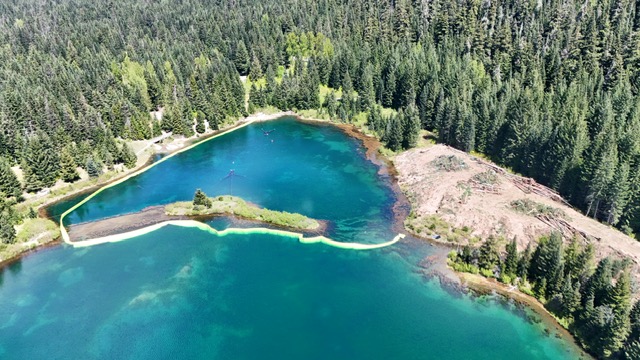
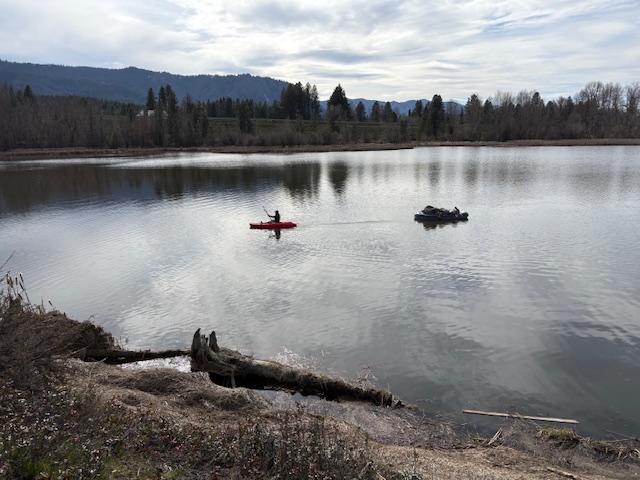
If you’ve hiked along Gold Creek in late summer, you probably found something unsettling for a mountain stream near Snoqualmie Pass: no water. By late July, the lower mile and a half of the creek runs dry, leaving Bull Trout stranded in isolated pools, exposed to predators and heat, unable to reach the spawning grounds their population has used for generations.
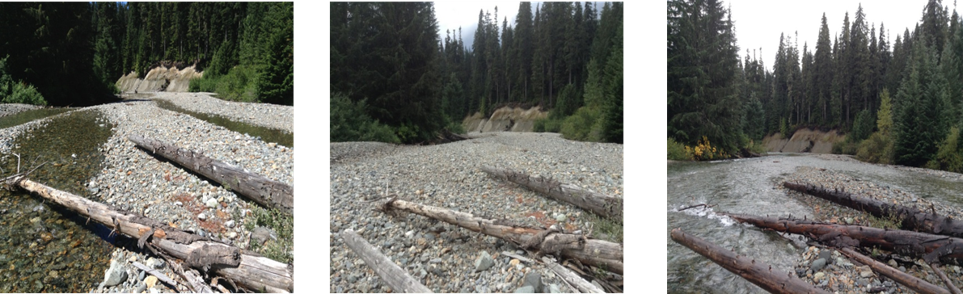
Gold Creek in June, July, and late September
This creek is the headwaters of the Yakima River, and what happens here sets the tone for everything downstream. It’s also home to a Bull Trout population found nowhere else on earth, “genetically distinct”, and running out of time.
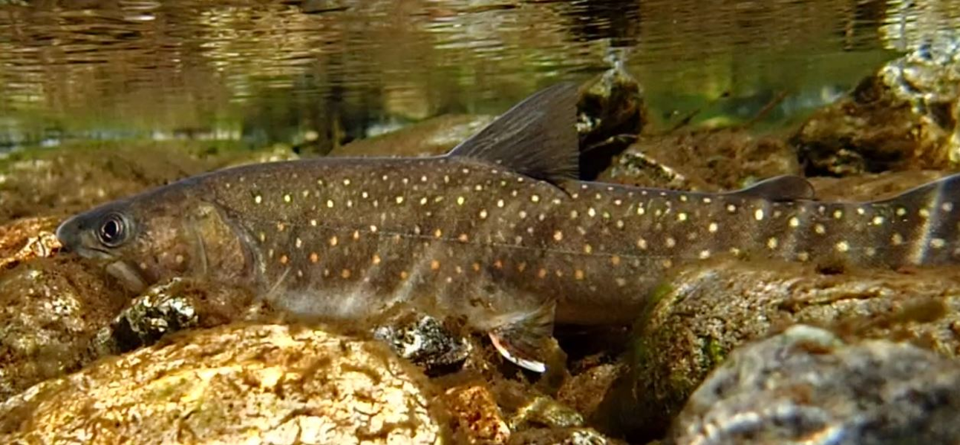
Gold Creek juvenile Bull trout
Decades of gravel mining, road-building, and clear-cut logging stripped Gold Creek of the one thing every healthy headwater stream needs: wood.
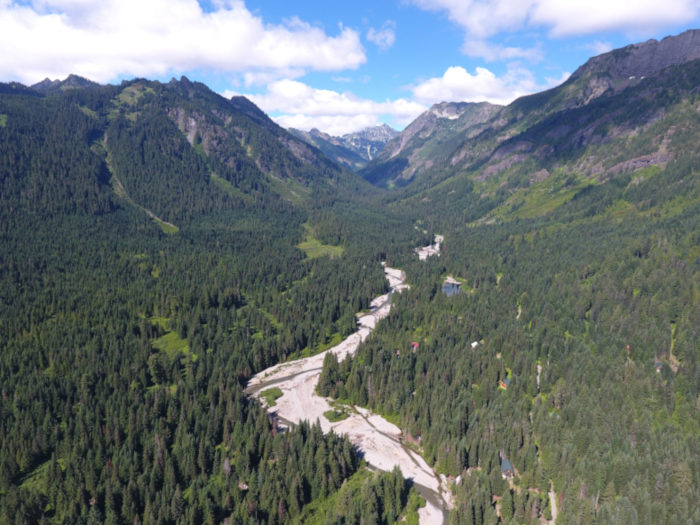
That’s what KCT is now putting back. This year, construction is underway on 2.5 miles of Gold Creek, where crews are installing 141 engineered log jams and reconnecting 1.4 miles of relict side channels. This is the largest restoration effort in KCT’s history, and one of the most significant Bull Trout recovery projects in the state.
It might seem strange that piling logs into a river is considered restoration rather than an obstruction, but log jams aren’t just debris. They are engineered infrastructure. But what do they do?
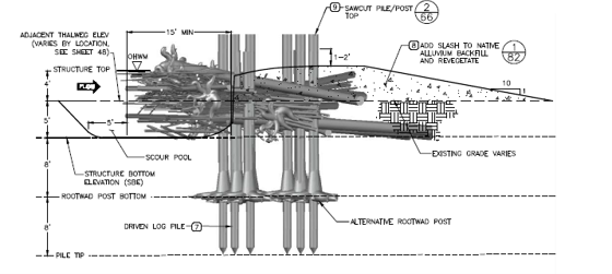
Engineered Log Jam Design Drawing
1. They build the complexity fish need to survive
A stream with no wood in it is a stream with nowhere to hide. Log jams create the deep pools, undercut banks, and slow-water pockets that salmonids and other native fish depend on at every stage of life.
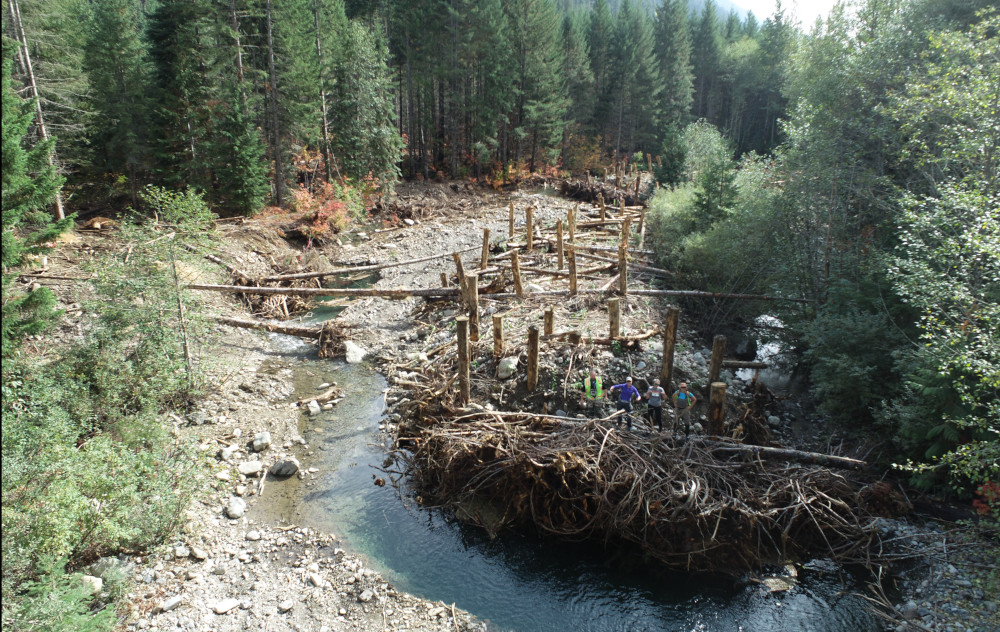
Engineered Log Jam with large scour pool in the front. Kachess River Restoration Project
Log jams provide a place for juveniles to shelter from predators, for adults to rest during migration, and for eggs to incubate without being scoured away by high flows. At Gold Creek, that complexity is the difference between a Bull Trout population barely hanging on, and one with the room and ability to grow and recover.
2. They slow the water down and that changes everything downstream
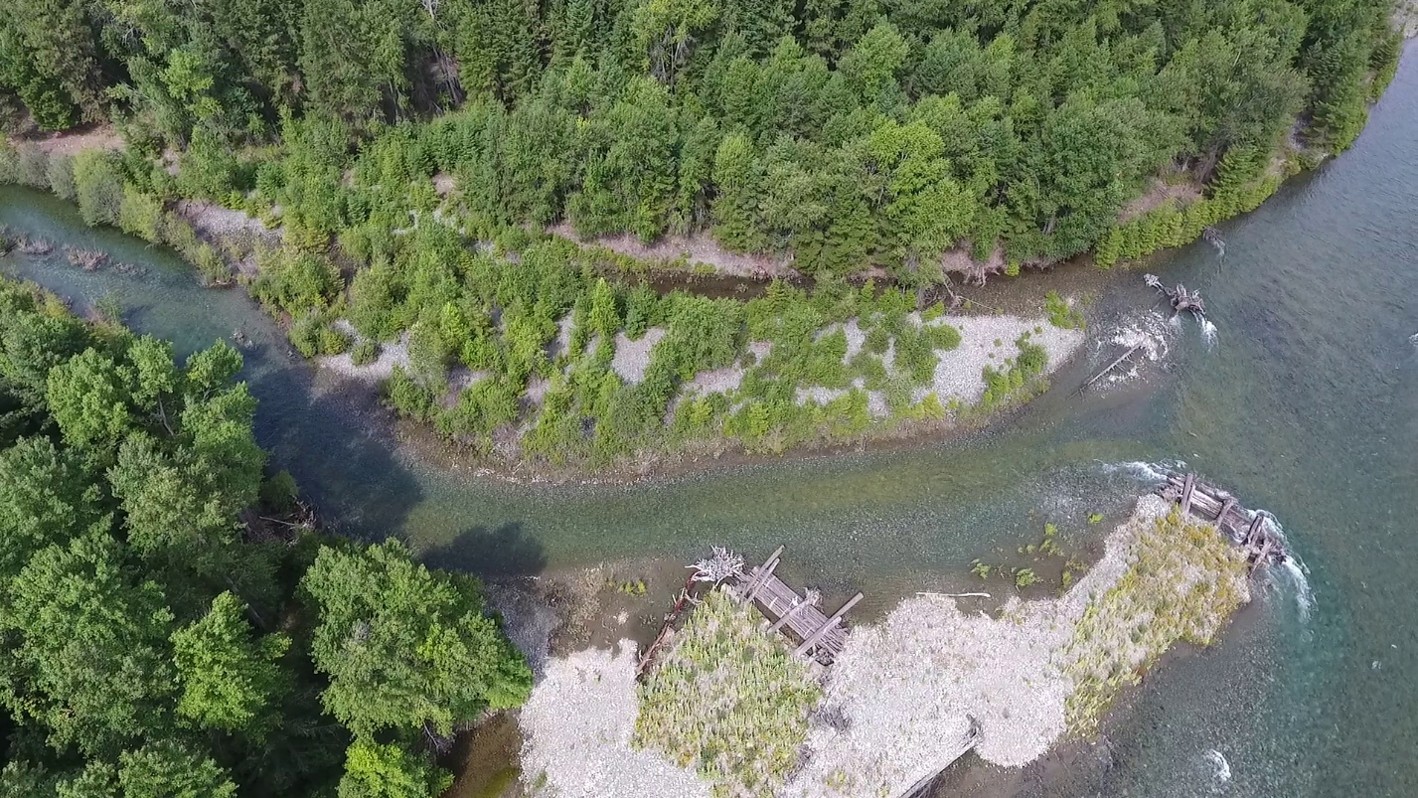
Deflecting and slowing flow. Cle Elum River Restoration Project - Phase 2
A log jam forces water to work for it: some of the flow backs up, some dives underground through the gravel, and some gets pushed sideways into new side channels – the 1.4 miles of side-channel habitat this project is building. That slower, more complex flow does more than create shelter. It gives macroinvertebrates, the aquatic insects that form the base of the food web, more surface area and stable habitat to colonize. This means more biomass moving up the chain to feed the fish. A straightened, wood-free channel flushes that productivity downstream and out of the system. A log-jam-rich channel holds onto it.
3. They reconnect the floodplain to everything living around it
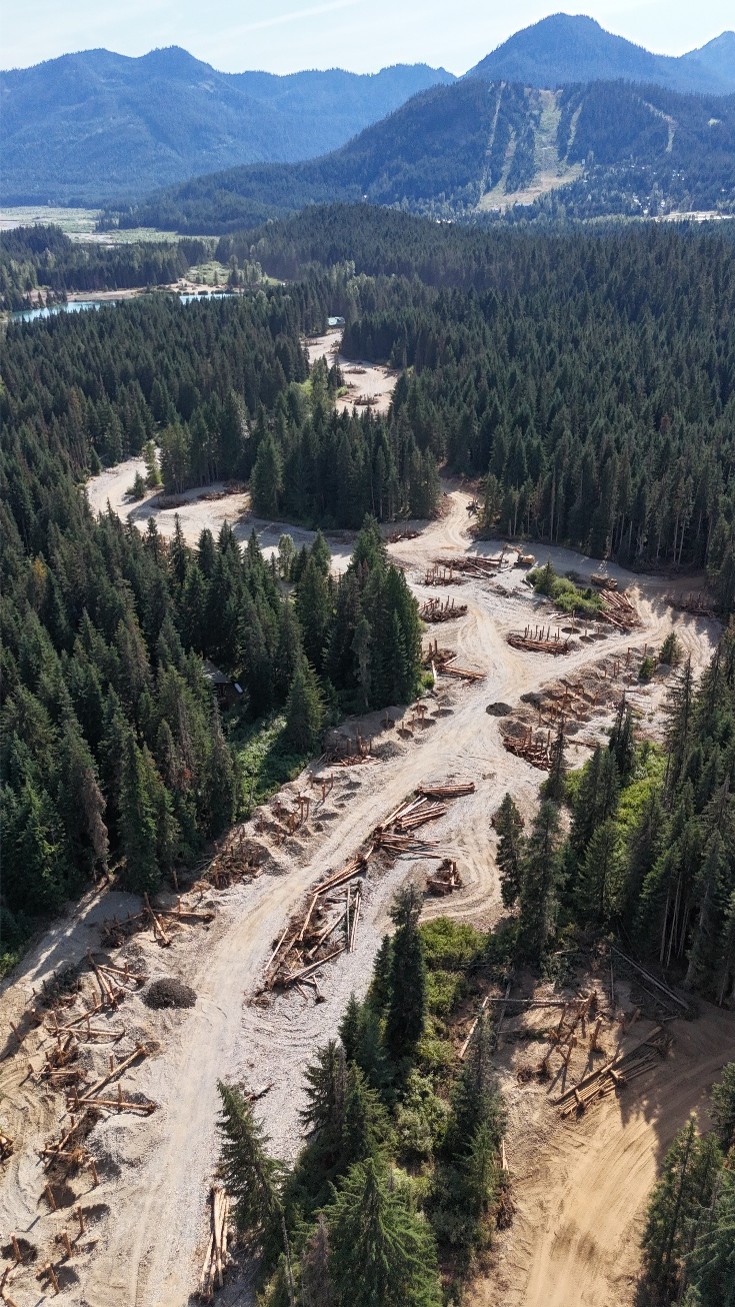
Gold Creek Valley Restoration construction in progress
When a stream is disconnected from its floodplain, it isn’t just fish that lose out. Log jams raise water tables, spread seasonal flooding back across the valley floor, and reconnect side channels and wetlands that had been cut off for decades. These are habitats that riparian birds, amphibians, beavers, and understory plant communities all depend on. At Gold Creek, that reconnection work extends to 245 acres of floodplain, alongside the removal of a 27-acre gravel pit currently siphoning water away from the creek. The goal isn’t a healthier stream in isolation, it’s a healthier valley overall.
What this means for the Yakima Basin
Headwaters set the baseline for every mile of river below them. Restoring Gold Creek’s ability to hold water, grow food, and shelter fish through the summer isn’t just a local fix, it’s an investment in the health of the entire upper Yakima system that Kittitas County depends on.
This project has been thirteen years in the making, with $14.8 million in committed funding and partners including the U.S. Forest Service, the Yakama Nation, and the Yakima Basin Integrated Plan standing alongside KCT. It’s the kind of work that only happens with sustained community support behind it. The in-stream portion of this project will be complete this fall, but restoring the gravel pit will need years of additional funding and partner support.
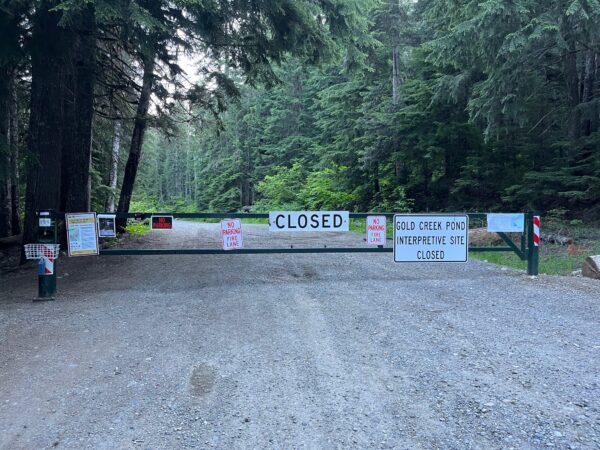
As large machinery continues to restoration work, the area remains closed. For the safety of our contractors and the public, no unauthorized public access is allowed beyond the gate at Frontage Road. We appreciate the public’s understanding and cooperation.
Our Partners
A special thanks to all of our partners who are working with us on the Gold Creek project!


To learn more about KCT’s restoration efforts in Gold Creek Valley, please visit our Gold Creek Valley Restoration project page.

Protect the Lands You Love
We love this amazing area and we know you do too! From the alpine environment at Snoqualmie Pass to the shrub steppe habitat of the Yakima River Canyon, Kittitas County is home to an amazing diversity of habitat types. These special places are under increasing pressure from development. The population is projected to grow by 40% in our rural areas in the next 20 years. This growth makes it more important than ever to protect our lands before it is too late, and you can help.
Your support will ensure critical habitat in Kittitas County remains accessible and healthy for wildlife, fish, and people. Just $25 or more for the year will preserve important habitat and restore streams and rivers that have been degraded by human impacts.