SO Many Fish!
If you’ve been following our Gold Creek Valley Restoration Project, you may have found yourself wondering about Gold Creek Pond. Gold Creek Pond didn’t start off as a pond at all. Before the mid 1900’s, this area was a forested wetland, but as I-90 was constructed, gravel mining created a 50-60 foot deep, 27 acre hole. This hole began to change flow paths of groundwater in the valley, siphoning water away from Gold Creek and exacerbating stream dewatering events. Eventually the hole completely filled with water, becoming an artificial pond.

1942

1975
But what’s in the “pond” today? Are there fish in the there? How many? What kind? Are they big? KCT staff and partners have had all the same questions.

Last summer, we found answers to many of these questions.

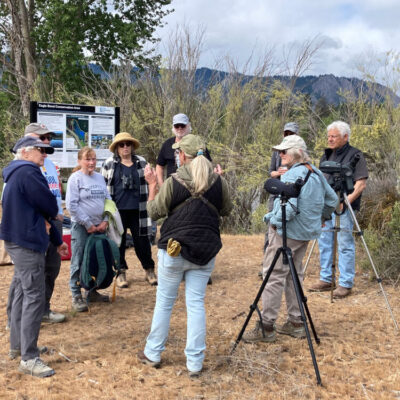
Working with our federal, state, and tribal partners, a variety of sampling methods were used to survey Gold Creek Pond. The goal of these surveys was to answer our questions as well as evaluate the effectiveness of various techniques for rescuing fish from the pond before restoration begins. Over the course of seven survey days from June to October of 2025, at least 12 species and more than 2,500 fish were observed.


The most abundant species observed was Northern pikeminnow, making up 57% of the total fish observed. Suckers, redside shiners, and whitefish were the next most abundant species observed, making up 25%, 11%, and 3% of observations respectively. Other species observed included cutthroat and rainbow trout, kokanee fry, sculpin, and brook trout. Two bull trout were observed during sampling efforts as well.


After learning that not only are fish abundant in the pond, but that ESA listed bull trout may be present, KCT and it’s partners now have a clear picture of the effort needed to rescue fish out of the pond before beginning restoration efforts. Substantial efforts will also be made to ensure that fish will not re-enter the pond during the years while restoration actions are in progress.
KCT is very grateful for the “all hands on deck” as we work together to ensure we have the most effective tools for fish rescues in the 27 acre, nearly 60 foot deep legacy gravel borrow pit. Fish rescue and relocation efforts will begin soon, prior to the restoration work scheduled for this spring and summer. Thank you to our U.S. Fish and Wildlife Service, Yakama Nation Fisheries, Washington Department of Fish and Wildlife, and U.S. Forest Service partners for all your work!


To learn more about KCT’s restoration efforts in Gold Creek Valley, please visit our Gold Creek Valley Restoration project page.

Protect the Lands You Love
We love this amazing area and we know you do too! From the alpine environment at Snoqualmie Pass to the shrub steppe habitat of the Yakima River Canyon, Kittitas County is home to an amazing diversity of habitat types. These special places are under increasing pressure from development. The population is projected to grow by 40% in our rural areas in the next 20 years. This growth makes it more important than ever to protect our lands before it is too late, and you can help.
Your support will ensure critical habitat in Kittitas County remains accessible and healthy for wildlife, fish, and people. Just $25 or more for the year will preserve important habitat and restore streams and rivers that have been degraded by human impacts.